



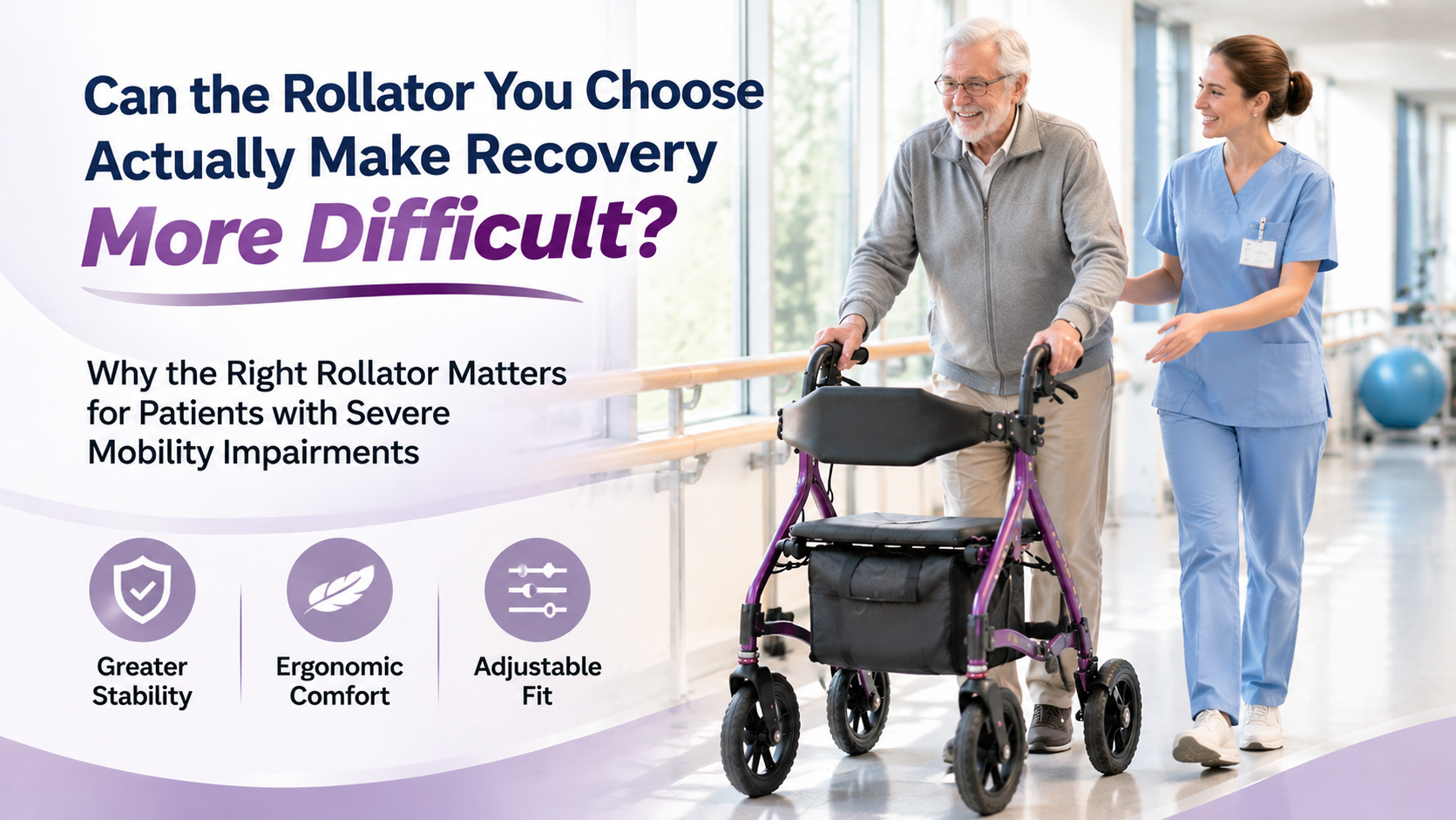
Can the Rollator You Choose Actually Make Recovery More Difficult?
When it comes to mobility aids, the right rollator for a patient is more than just a convenience—it's a critical component of their recovery journey. For patients with severe mobility impairments, the wrong rollator choice can delay recovery, exacerbate discomfort, and even lead to more severe health issues.
For many healthcare providers, selecting the right rollator seems straightforward—after all, they all perform the same basic function, right?
But here’s the issue:
A one-size-fits-all approach simply doesn’t work for patients with severe mobility impairments. These patients often have unique needs that require specialized, customizable solutions to optimize comfort, stability, and safety. Choosing the wrong rollator—one that doesn’t address these needs—can lead to:
· Increased fall risk
· Musculoskeletal strain
· Reduced patient compliance
In this article, we will explore why severe mobility impairments require specialized rollator designs, and how the right fit can enhance recovery, minimize health risks, and support long-term patient independence.
The Growing Need for Specialized Rollators
The Aging Population and the Surge in Mobility Impairments
The global population is aging rapidly. According to the United Nations, the number of people aged 65+ will rise from 703 million in 2019 to 1.6 billion by 2050. This demographic shift is driving an increase in chronic diseases, injuries, and surgeries that affect mobility.
· In the United States, nearly 1 in 4 adults aged 65 and older report difficulty walking or climbing stairs, which often leads to a dependence on mobility aids.
· Orthopedic surgeries such as hip and knee replacements have become more common, with approximately 1 million hip replacements performed annually in the U.S. alone.
For patients with severe mobility impairments, proper mobility aids like rollators are essential to restore and maintain functional independence. However, standard rollators often fail to meet the specific needs of these patients.
Why Standard Rollators Aren’t Enough for Severe Mobility Impairments
While rollators are designed to aid movement, one-size-fits-all models are not always appropriate for those with severe mobility challenges. Here's why:
1. Stability Issues: A Leading Cause of Falls
Stability is paramount for patients with severe mobility impairments, yet many standard rollators do not provide the necessary stability. Narrow frames and small wheels can make it harder for patients to maintain balance, especially in environments with uneven floors or outdoor terrain.
Data Insight: According to a 2018 study from the National Institute of Health (NIH), patients using smaller-wheeled rollators reported 40% higher fall rates compared to those using rollators with larger, more stable wheels.
Patients with muscle weakness or balance issues require mobility aids that offer better ground contact, ensuring safe and stable movement.
2. Musculoskeletal Strain from Improper Fit
When a rollator is too high, too low, or poorly designed, it can place undue stress on the arms, back, and wrists. Patients with severe impairments already face increased risk for joint pain and muscle strain.
· Incorrect handle height forces patients to bend forward or elevate their shoulders unnaturally, which contributes to spinal misalignment and discomfort.
· Poorly designed hand grips or too stiff handles can exacerbate hand and wrist pain, especially for patients with arthritis or carpal tunnel syndrome.
A 2020 study published in the Journal of Rehabilitation Research and Development found that incorrect rollator sizing and ergonomic design issues contributed to 31% of musculoskeletal complaints in patients with severe mobility impairments.
3. Reduced Compliance and Slower Recovery
Patients with severe impairments often struggle to comply with rehabilitation plans. An uncomfortable or unstable rollator may cause patients to avoid using it, which in turn delays recovery and reduces rehabilitation effectiveness.
· Discomfort from improper fit can lead to less frequent use, making recovery slower and more difficult.
· A poorly designed rollator can make simple activities like walking or standing painful, discouraging patients from staying active and engaged in their recovery.
How Specialized Rollators Help Address These Issues
To meet the needs of patients with severe mobility impairments, rollators must be designed with specific features that enhance comfort, stability, and usability. Here’s what makes a rollator specialized for severe impairments:
1. Enhanced Stability
The most important factor in improving safety and comfort for patients with severe impairments is stability. Specialized rollators should have:
· Wide frames: A wider base provides greater balance and reduces tipping risks.
· Large wheels: Larger wheels help ensure the rollator can move smoothly over uneven terrain, providing better traction and reducing falls.
· Reinforced frames: Strong, durable frames are necessary to support patients who may need additional support to stay balanced.
2. Ergonomic Design for Comfort
Ergonomics is crucial for long-term use. Patients who rely on their rollator for extended periods need a design that promotes proper posture and minimizes strain. Specialized features include:
· Adjustable height handles: Ensuring the rollator’s handles are at the right height helps patients maintain a natural walking posture, reducing strain on the back and shoulders.
· Padded handles and seats: Soft, comfortable grips reduce pressure on the hands and wrists, and cushioned seats allow patients to rest when needed, promoting longer use.
A 2020 study published in the Journal of Geriatric Physical Therapy found that patients using ergonomically designed rollators with adjustable handles and padded seats experienced 33% less discomfort and were 40% more likely to engage in rehabilitation exercises.
3. Lightweight and Easy to Maneuver
Patients with severe impairments often lack the upper body strength required to use heavy, cumbersome mobility aids. Rollators designed for these patients should be lightweight, easy to maneuver, and foldable for storage and transport. This allows patients to use their mobility aid both at home and in healthcare settings without additional strain.
· Lighter materials such as aluminum frames help reduce overall weight without sacrificing stability.
· Foldable designs make it easier to store or transport the rollator when not in use.
What Healthcare Providers Should Consider When Selecting Rollators
1. Patient-Specific Needs
Selecting the right rollator requires understanding the patient’s:
· Physical condition: Consider factors like muscle strength, joint health, and mobility range.
· Recovery stage: Early recovery patients may require more stable rollators, while later recovery patients might need more flexible options.
2. Durability and Long-Term Use
Healthcare providers should choose rollators made from durable materials such as reinforced aluminum or stainless steel. These materials ensure that the rollator can withstand frequent use and long-term wear and tear in institutional settings.
3. Adjustable Features
The ability to adjust the rollator to the individual patient’s body is essential. Adjustable handles, seats, and footrests allow for a more comfortable and functional experience, reducing musculoskeletal strain and promoting better posture.
Conclusion: The Importance of Proper Rollator Selection for Severe Mobility Impairments
In conclusion, proper rollator selection is critical for patients with severe mobility impairments. A rollator that offers stability, comfort, and adjustability not only enhances patient safety but also supports faster recovery and improved long-term mobility.
Healthcare providers must prioritize patient-specific needs when selecting mobility aids, ensuring that each rollator is suited for the individual patient’s body, recovery stage, and physical condition.
Choosing the right rollator is more than just a medical decision—it is an investment in the health and well-being of your patients.