



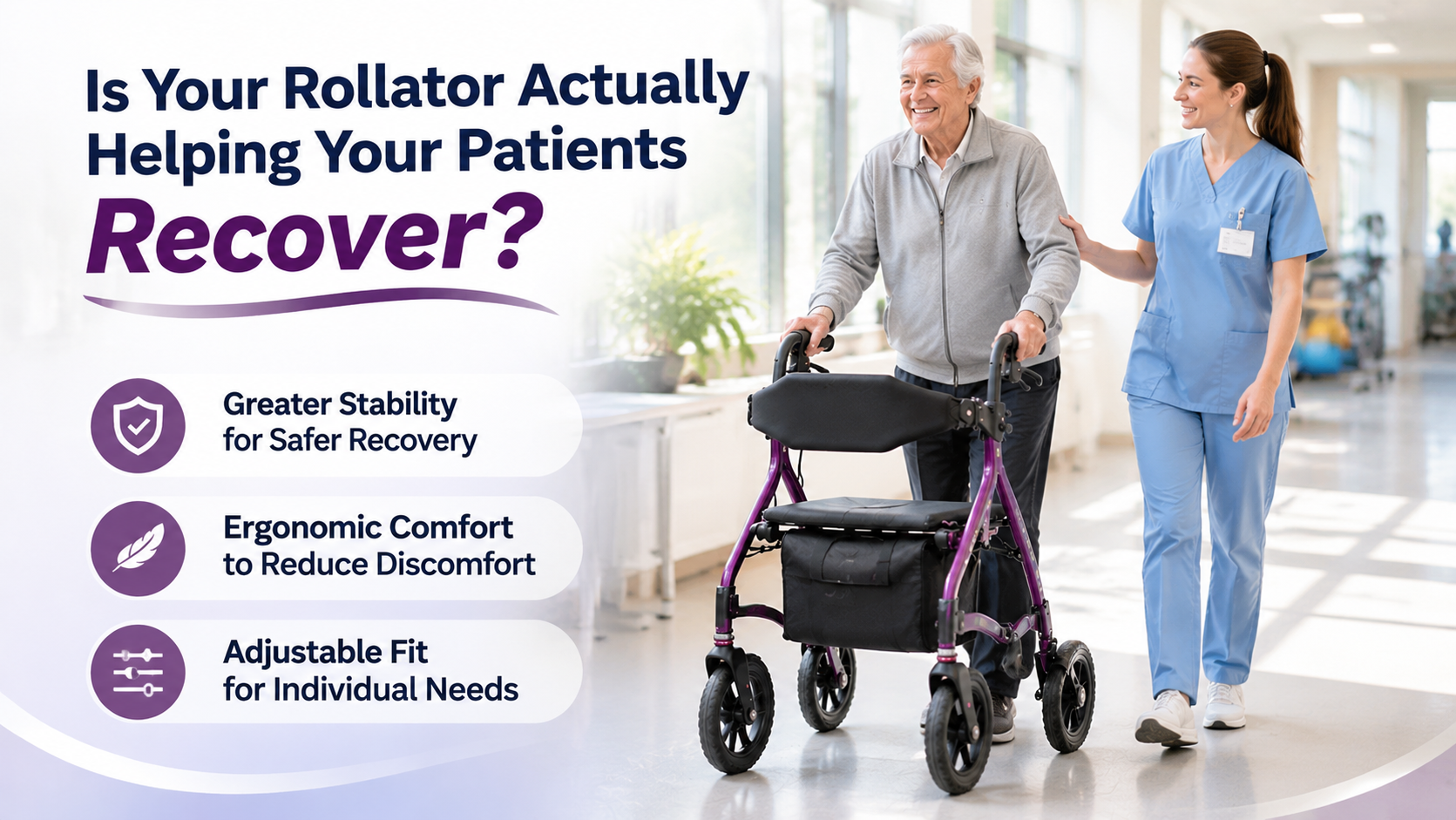
Is Your Rollator Actually Helping Your Patients Recover?
Post-surgery recovery for elderly patients can be challenging. Whether recovering from a hip replacement, knee surgery, or ankle fracture, mobility is key to regaining independence. However, many healthcare providers overlook a critical component in recovery: the right mobility aid.
For many elderly patients, traditional crutches or non-specialized rollators can actually hinder recovery due to their lack of proper support and comfort. When patients are not using the right equipment, they risk further injuries, discomfort, and slower recovery times.
The question is clear:
How can we ensure the rollator patients use actually helps them recover effectively, while minimizing additional risks?
The Importance of Proper Mobility Aids in Post-Surgery Recovery
The Growing Demand for Mobility Support
As the global population ages, the number of elderly patients requiring surgery increases significantly. According to the World Health Organization (WHO), the number of people aged 65 and older will more than double by 2050, and many of these individuals will experience surgical procedures requiring mobility support.
· By 2050, there will be an estimated 1.6 billion elderly individuals worldwide.
· Orthopedic surgeries such as hip and knee replacements are expected to increase significantly, with nearly 2 million hip replacements performed annually worldwide.
In post-surgery care, mobility aids such as rollators are essential in ensuring that patients can begin the recovery process safely. However, a generic rollator that isn’t tailored to the patient’s needs can do more harm than good.
Why Standard Rollators Don’t Work for Post-Surgery Patients
1. Lack of Stability
After surgery, particularly in hip and knee replacements, stability is crucial. A rollator that isn’t designed for stability can cause patients to lose their balance, increasing their fall risk.
Data Insight: According to a 2019 study by the National Institutes of Health (NIH), patients recovering from hip surgery who used standard rollators were 40% more likely to experience falls compared to those using specialized post-surgery rollators.
The stability of a rollator is determined by factors such as:
· Wheel size
· Frame width
· Braking system
For patients with limited mobility and reduced balance, a stable design ensures they are supported throughout the recovery process.
2. Uncomfortable Design Leading to Discomfort
Post-surgery patients often experience pain and discomfort, especially when they are required to walk or stand for extended periods. A rollator that is not ergonomically designed can cause strain on the wrists, shoulders, and lower back.
User Story: A 68-year-old patient recovering from knee surgery shared, “I used crutches for a while, but my hands and shoulders hurt so much that I stopped using them. When I switched to a specialized rollator with ergonomic handles and a padded seat, the pain was significantly reduced, and I could walk longer distances.”
Patients with arthritis or musculoskeletal conditions also require mobility aids that offer padded handles and comfortable seating to minimize strain.
3. Limited Adjustability
Post-surgery patients come in all shapes and sizes. One-size-fits-all rollators simply don’t work when patients require highly adjustable settings to accommodate their height, body proportions, and specific surgical needs.
Rollators with adjustable handles and height-adjustable seats can help patients maintain a proper posture, reducing the risk of strain or injury. The ability to adjust the rollator to fit the individual ensures that patients are walking in a comfortable, safe manner.
How Specialized Rollators Address Post-Surgery Needs
1. Enhanced Stability for Safe Mobility
Specialized rollators are designed with enhanced stability to minimize the risk of falls during recovery. Features such as:
· Wider frames for better balance
· Larger wheels to navigate different surfaces
· Reliable braking systems to ensure safety
These features provide the support patients need to stay safe while increasing their confidence as they regain mobility.
Real-world example: A rehabilitation clinic in Canada reported a significant decrease in fall-related incidents among patients using rollators with wider frames and larger wheels.
2. Comfort-Oriented Design to Reduce Discomfort
Comfort is a key aspect of a rollator designed for post-surgery recovery. Specialized rollators should include:
· Ergonomically designed handles to reduce hand and wrist strain
· Cushioned seats for rest breaks
· Padded backrests to support posture during longer periods of use
Data Insight: According to a 2021 study in the Journal of Geriatric Rehabilitation, patients using ergonomic rollators experienced 30% less discomfort compared to those using non-adjustable models, which led to higher usage rates and faster recovery.
By focusing on comfort, these rollators ensure that patients feel supported, reducing the likelihood of musculoskeletal issues and improving their overall rehabilitation experience.
3. Adjustable Features for Personalized Fit
Not every patient’s body is the same. A post-surgery rollator must be adaptable to meet the unique needs of different patients. Key adjustable features include:
· Handle height adjustment
· Seat height adjustment
· Footrest customization
By ensuring that the rollator can be personalized to fit the patient’s body, it becomes a tool that supports long-term recovery, helping patients maintain a natural walking posture and avoid additional strain.
4. Easy to Use and Transport
Post-surgery patients are often weakened and may struggle with complex devices. Specialized rollators for recovery should be:
· Lightweight and easy to maneuver
· Foldable for easy storage and transport
· Simple to operate with intuitive features like brakes and a steering mechanism
This ensures that patients are not only comfortable but can also use the rollator independently.
What Healthcare Providers Should Consider When Choosing Rollators
1. Tailored to Patient Needs
Healthcare providers should assess the post-surgery phase of each patient to determine their specific needs. For instance:
· Early recovery: Focus on stability and support.
· Later recovery: Focus on adjustability and mobility.
2. Durability and Longevity
In a healthcare setting, durability is key. Rollators used in facilities should be able to withstand frequent use and should be made from high-quality materials such as reinforced aluminum or stainless steel.
3. Patient Comfort and Safety
Safety features such as:
· Anti-slip wheels
· Responsive brakes
· Padded handles and seats
These are essential to ensure that the rollator not only performs well but also keeps patients safe and comfortable.
4. After-Sales Support
Healthcare providers should choose suppliers that offer warranty services, technical support, and spare parts to ensure that rollators remain in optimal condition for long-term use.
The Positive Impact of Specialized Rollators on Post-Surgery Recovery
Specialized rollators provide key benefits during post-surgery recovery:
· Reduced fall risk: Increased stability and secure design help minimize fall-related incidents.
· Better mobility: Patients can move more easily and safely, promoting quicker recovery.
· Improved patient satisfaction: Comfortable, adjustable, and safe rollators lead to higher patient compliance and long-term rehabilitation success.
Conclusion
In conclusion, selecting the right rollator is crucial for patients recovering from surgery. A specialized rollator designed to enhance stability, comfort, and adjustability not only improves safety but also accelerates recovery and promotes long-term mobility.
For healthcare providers, ensuring the right fit and design is a clinical decision, one that directly influences patient outcomes and overall rehabilitation success.