



Mobility aids such as walkers and rollators are designed to improve safety, stability, and independence. However, long-term use depends on more than basic functionality.
A device may have a strong frame and reliable performance, but if it causes discomfort during daily use, seniors may reduce usage or avoid it altogether.
For olde adults, mobility equipment often becomes part of their daily routine. It may be used when:
· Walking around the home
· Going outdoors
· Shopping
· Participating in rehabilitation activities
· Attending social events
This means comfort is not simply an additional feature. It is an important factor influencing whether a mobility solution can truly support independence.
Research in rehabilitation and aging care highlights that maintaining regular activity is important for preserving functional ability. However, discomfort, fatigue, and poor usability can become barriers to consistent mobility.
A 76-year-old user shared:
"My walker helped me feel safer, but after longer use my hands and shoulders became tired. I started using it only when I really needed it."
This reflects an important principle:
A successful mobility aid must not only support movement. It must make movement comfortable enough to continue.
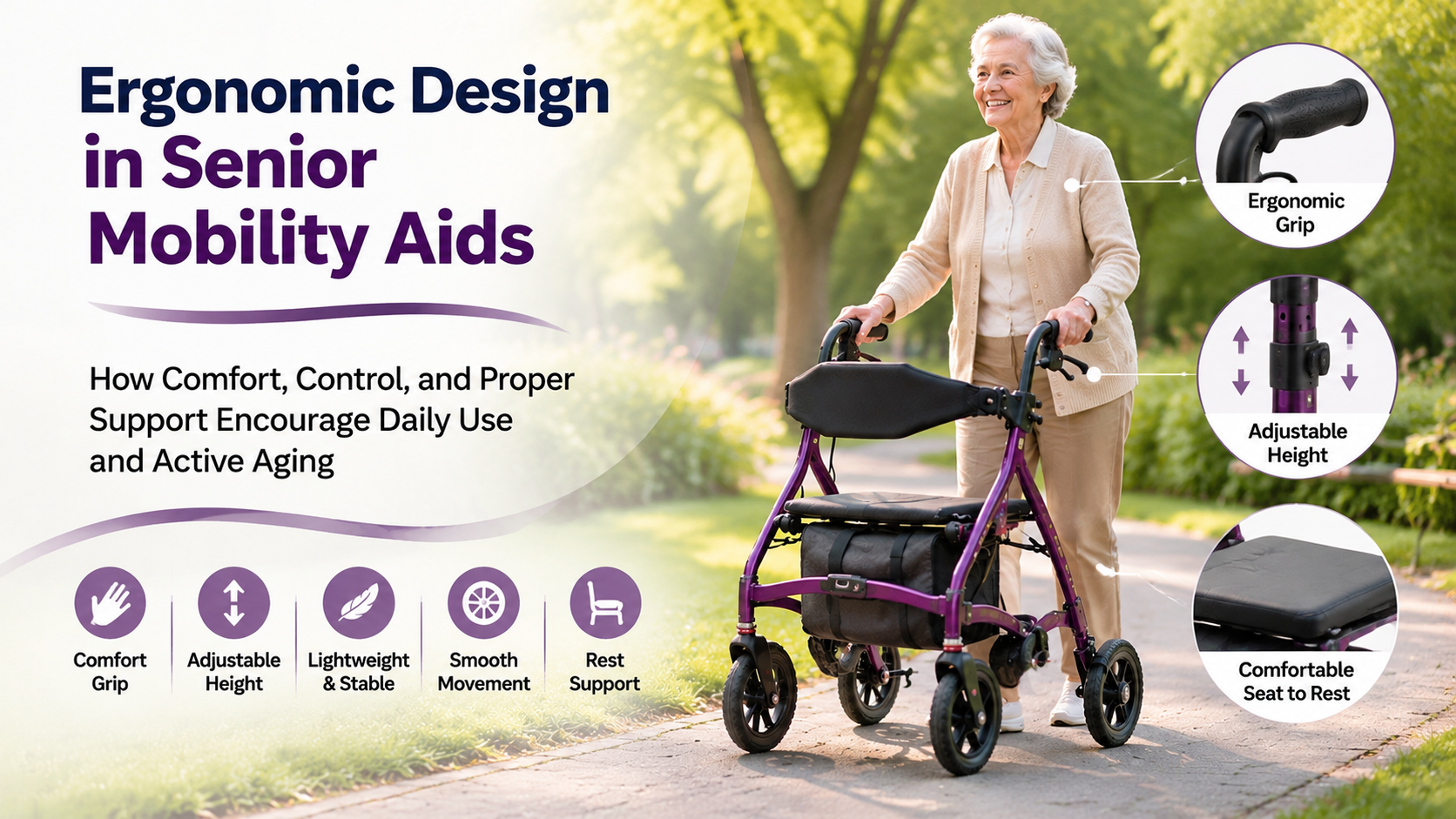
Why Ergonomics Matters in Senior Mobility
Ergonomics focuses on designing products that better match human physical characteristics and usage patterns.
For seniors, ergonomic mobility design considers:
· Body changes caused by aging
· Reduced muscle strength
· Different balance abilities
· Long-term daily use
The goal is to reduce unnecessary physical stress while improving control and comfort.
1. Hand and Grip Comfort Affect Daily Experience
The hands are one of the main connection points between users and mobility devices.
Poor grip design may create:
· Excessive pressure on the palm
· Wrist discomfort
· Reduced control
· Faster fatigue
This can be especially challenging for seniors with:
· Reduced grip strength
· Joint stiffness
· Arthritis-related discomfort
How Ergonomic Grip Design Helps
A well-designed handle should consider:
Appropriate Shape
A grip that follows natural hand positioning can help distribute pressure more evenly.
Benefits:
· Better comfort
· Improved control
· Reduced hand stress
Suitable Materials
Comfortable materials can improve:
· Grip stability
· Long-term usability
· User confidence
Proper Grip Size
A handle that is too large or too small may increase effort.
The correct size helps users control the device more naturally.
2. Correct Posture Reduces Physical Strain
The relationship between the user and the mobility aid affects the entire body.
If a device is not adjusted properly, users may experience:
· Forward leaning posture
· Shoulder tension
· Back discomfort
· Reduced walking efficiency
For seniors, maintaining a natural posture is important because many already experience age-related changes in:
· Muscle strength
· Joint flexibility
· Balance ability
Adjustable Handle Height Improves Adaptation
Different users have different body structures.
Adjustable handles allow customization based on:
· Height
· Arm position
· Walking style
Benefits include:
· Better posture
· Improved control
· Reduced unnecessary strain
3. Lightweight Design Reduces Daily Burden
Mobility aids are often used repeatedly throughout the day.
A device that is difficult to push or transport may increase fatigue.
Important design considerations include:
· Frame weight
· Weight distribution
· Movement efficiency
The Importance of Balance Between Weight and Stability
Lightweight design does not simply mean making a product as light as possible.
A mobility aid still needs:
· Structural strength
· Stability
· Safety performance
The goal is creating the right balance between:
· Easy handling
· Reliable support
4. Smooth Movement Improves User Confidence
The movement experience depends greatly on the mobility system.
Poor movement performance may cause:
· Difficulty turning
· Increased pushing effort
· Reduced confidence
Low-Resistance Wheel Systems
Well-designed wheels can help users:
· Move with less effort
· Maintain walking rhythm
· Navigate daily environments more easily
Flexible Turning Ability
Indoor environments often require frequent direction changes.
Better maneuverability supports:
· Narrow spaces
· Household movement
· Community environments
Shock Reduction for Outdoor Comfort
Outdoor surfaces may include:
· Uneven sidewalks
· Small obstacles
· Different ground materials
Reducing vibration can improve comfort during longer activities.
5. Rest Support Helps Manage Energy
Not every senior has difficulty walking. Many struggle with endurance.
A person may be able to walk but become tired after longer distances.
Mobility designs that include rest support can help users:
· Take breaks safely
· Extend outdoor activities
· Manage energy levels
A caregiver shared:
"The biggest difference was that the person stopped worrying about how far they could go because they knew they could rest when needed."
Rest support encourages participation rather than replacing movement.
Why Poor Ergonomics Reduces Long-Term Use
A mobility aid only creates value when it becomes part of daily life.
1. Discomfort Reduces Usage Frequency
If using a device causes:
· Pain
· Fatigue
· Frustration
users may gradually reduce usage.
This can affect:
· Activity levels
· Independence
· Social participation
2. Poor Experience Reduces User Acceptance
A mobility aid is not only a medical product.
It is also a daily lifestyle tool.
Users consider:
· How it feels
· How easy it is to use
· Whether it fits their routine
A product that feels natural is more likely to be accepted.
3. Comfort Influences Confidence
When seniors feel comfortable using a device, they may feel:
· More in control
· More willing to move
· More confident outdoors
Psychological confidence is an important part of maintaining mobility.
How Ergonomic Design Supports Active Aging
Ergonomic mobility design contributes to active aging by helping seniors continue participating in meaningful activities.
Supporting Independence
Comfortable mobility aids can help seniors maintain:
· Daily routines
· Household activities
· Personal choices
Encouraging Outdoor Participation
When mobility feels easier, seniors may be more willing to:
· Walk in the community
· Visit family
· Join activities
Reducing Caregiver Pressure
When seniors can move more comfortably:
· They may require less unnecessary assistance
· Caregivers can focus support where it is most needed
Considerations for Healthcare Providers and Buyers
When evaluating mobility products, healthcare organizations should consider more than technical specifications.
1. Evaluate Real User Experience
Important questions:
· Is the product comfortable during long-term use?
· Is it easy to operate?
· Does it match the user's physical condition?
2. Consider Different User Groups
Different seniors may need different ergonomic solutions.
Examples:
Active seniors:
· Lightweight
· Portable
· Easy handling
Higher-support users:
· Greater stability
· More supportive structures
3. Focus on Long-Term Value
A comfortable mobility aid may provide value through:
· Higher usage consistency
· Better user satisfaction
· Improved daily mobility experience
A healthcare professional summarized:
"The best mobility product is not only safe in theory. It is comfortable enough that people want to use it every day."
Summary
Ergonomic design plays an important role in improving the senior mobility aid experience.
A well-designed mobility solution should provide:
· Comfortable interaction
· Proper body alignment
· Reduced physical effort
· Smooth movement
· Long-term usability
The purpose of mobility equipment is not simply to help seniors move from one place to another.
It is to help them continue participating in daily life with greater comfort and confidence.
A rehabilitation specialist summarized:
"Good mobility design respects both the physical needs and the daily experiences of the person using it."
By combining ergonomic principles with user-centered design, mobility products can become more than support tools. They can become reliable partners that help seniors maintain independence and active lifestyles.