



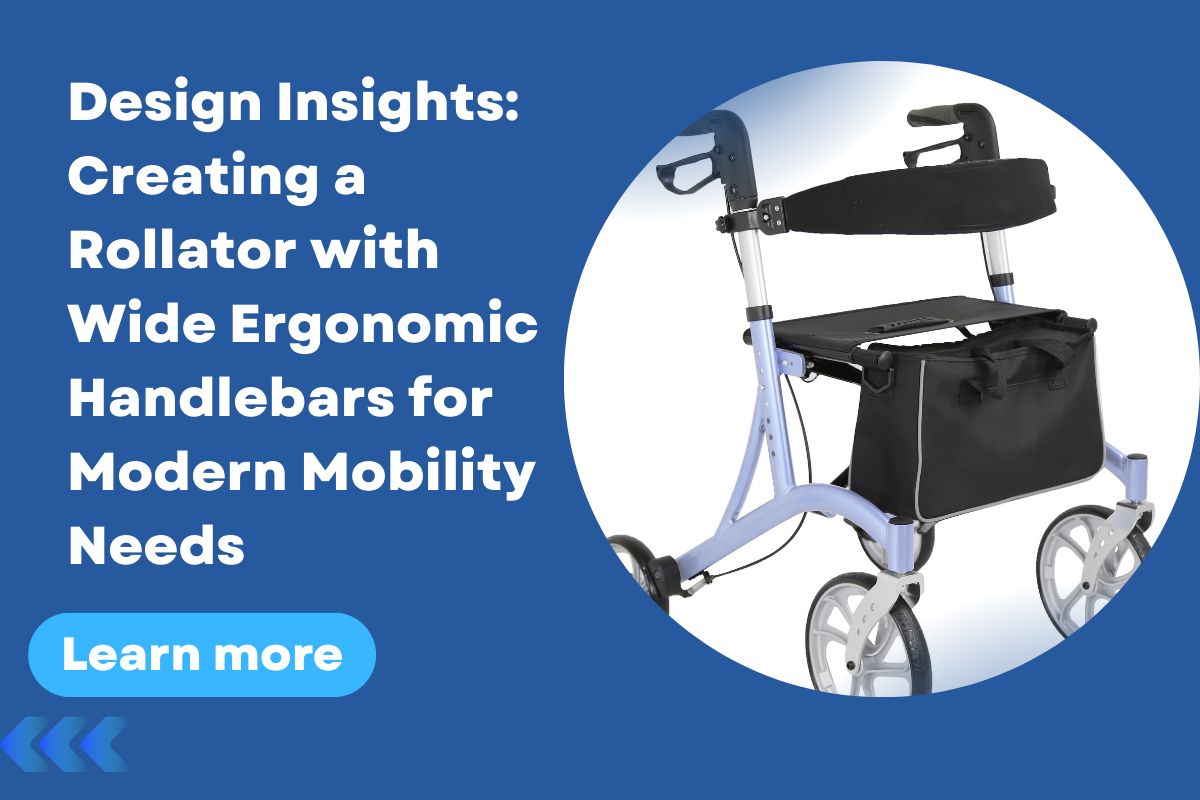
Maximizing Customer Loyalty: After-Sales Strategies and User Feedback for Rollator with Cane Holder: Convenient for Carrying Other Aids
Introduction
In the B2B world of medical device procurement, customer loyalty is no longer driven solely by product quality or price. Today’s buyers—particularly in healthcare, retail, and institutional sectors—are looking for partners who offer robust after-sales support, value-adding services, and responsive user feedback channels. For organizations supplying the Rollator with Cane Holder: Convenient for Carrying Other Aids, building a strong after-sales ecosystem is critical for long-term business growth, higher retention rates, and a leading reputation in a competitive market.
This comprehensive guide explores after-sales best practices, proactive feedback mechanisms, and how to use real user data to continuously improve products and services.
1. The New Standard for After-Sales Service in Mobility Aids
A. Multi-Channel Support Systems
Dedicated Helplines and Chat: Provide both phone and digital support, with staff trained specifically in the Rollator with Cane Holder: Convenient for Carrying Other Aids.
Online Knowledge Base: Self-service resources including setup videos, FAQs, maintenance checklists, and troubleshooting guides.
Warranty Registration: Streamline warranty processes via digital registration, making it easier for B2B customers and end-users to access support.
B. Rapid Response and Service Commitments
Define service-level agreements (SLAs) for issue resolution and replacement part delivery.
Offer on-site support or remote video assistance for institutional clients.
Track resolution metrics—speed, first-contact fix rate, and customer satisfaction.
2. After-Sales Logistics: Spare Parts, Returns, and Repairs
A. Spare Parts Management
Maintain a ready stock of high-frequency replacement parts: wheels, brakes, baskets, cane holders, seat covers.
Provide easy ordering for B2B clients—bulk ordering portals, auto-replenishment, or consignment stock.
B. Return and Repair Workflows
Create clear, efficient processes for product returns, repairs, and replacements—minimizing disruption for healthcare and retail buyers.
Track returns data to identify recurring issues and proactively address quality control.
C. Training and Preventive Care
Offer virtual and in-person training for client staff and end-users on daily maintenance, cleaning, and safe use of the Rollator with Cane Holder: Convenient for Carrying Other Aids.
Distribute maintenance kits with each purchase to extend product lifespan and minimize after-sales calls.
3. Proactive User Feedback Collection
A. Customer Satisfaction Surveys
Implement scheduled feedback campaigns (post-purchase, 30-day follow-up, annual check-in).
Use NPS, CSAT, and open-ended questions to capture detailed feedback on the product and after-sales service.
B. Digital Product Registration and Feedback Loops
Encourage digital registration to collect usage data and trigger personalized follow-up.
Use QR codes on packaging for instant survey access or support requests.
C. Institutional Review Boards
For large B2B buyers, establish regular feedback sessions—inviting procurement leaders, therapists, and users to discuss pain points, feature requests, and service improvements.
4. Analyzing and Acting on Feedback
A. Data-Driven Improvement Cycles
Aggregate and analyze feedback to identify trends—e.g., common issues with the cane holder attachment or storage bag wear.
Prioritize product updates and service enhancements based on feedback volume and business impact.
B. Sharing Feedback with Suppliers
Collaborate with manufacturers, sharing real-world feedback to accelerate improvements and co-develop solutions.
Tie supplier KPIs to after-sales performance, incentivizing ongoing quality and innovation.
C. Transparency and Communication
Regularly communicate improvements and fixes to B2B customers—build trust by showing that feedback leads to action.
Create “You Said, We Did” updates in newsletters or on client portals.
5. Building Long-Term Loyalty and Competitive Advantage
A. Personalized Service for Key Accounts
Assign dedicated account managers for major institutional clients, offering tailored support and regular business reviews.
Develop loyalty programs—bulk purchase discounts, service extensions, or exclusive access to new product features.
B. Value-Added Services
Offer product customization, staff training, marketing support, and co-branded content to strengthen client relationships.
Enable B2B clients to upsell value-added packages (e.g., maintenance contracts, extended warranties) to their own customers.
C. Leveraging User Success Stories
Document and promote case studies of successful deployments—reduced fall incidents, higher patient satisfaction, improved operational efficiency.
Use testimonials and references to win new contracts and support existing client renewals.
6. Continuous Innovation Through User-Driven Design
A. Beta Testing with Key Clients
Involve select B2B partners in early trials of new features (e.g., enhanced cane holder design, digital integration, eco-friendly materials).
Collect feedback on usability, aesthetics, and additional needs.
B. Modular Upgrades
Offer retrofit kits or upgrade programs for clients wishing to enhance older units with new features—demonstrating a commitment to long-term value and sustainability.
C. Future Roadmap Alignment
Invite major clients to participate in advisory panels, shaping the product roadmap based on evolving user and market needs.
7. Measuring After-Sales Success
Repeat Purchase Rate: Track how often clients reorder or upgrade the Rollator with Cane Holder: Convenient for Carrying Other Aids.
Service Resolution Time: Monitor average time to resolve after-sales issues and reduce over time.
Product Uptime: Aim for >99% operational availability for institutional buyers.
Customer Satisfaction (CSAT/NPS): Regularly score and benchmark results for continuous improvement.
Referral and Testimonial Volume: Use client advocacy as a measurable success metric.
8. Real-World Case Example
A national senior living provider selected the Rollator with Cane Holder: Convenient for Carrying Other Aids for all its locations. By partnering with the manufacturer to co-develop training videos and launch a dedicated support line, the chain saw a 30% drop in maintenance calls and a 40% increase in positive user reviews. Staff feedback highlighted fewer lost canes, smoother patient transitions, and higher family satisfaction ratings.
Conclusion
For professional buyers, product managers, and supply chain leaders, after-sales excellence is the linchpin of loyalty and sustainable growth. By adopting a robust, data-driven after-sales program for the Rollator with Cane Holder: Convenient for Carrying Other Aids, organizations deliver greater satisfaction, stronger retention, and continuous market relevance—empowering both their own teams and the end-users who rely on these vital mobility solutions.
SEO Keywords for This Article
Rollator with cane holder
Mobility aid for seniors
Medical rollator walker
Walking aid with storage
All-in-one mobility device
Adjustable handle rollator
Foldable walking frame
Lightweight rollator walker
Indoor outdoor walker
Healthcare equipment for elderly
Rehab mobility product
Ergonomic mobility solution
Compact medical rollator
Hospital discharge walker
Multi-use rollator
Universal cane holder
Senior care product
Home healthcare device
Retail mobility equipment
Supply chain walker
B2B mobility aid
Durable walking frame
Travel-friendly rollator
Assisted living walker
Professional procurement walker
Quality assurance mobility aid
End-user satisfaction walker
All-terrain rollator
After-sales support device
Product manager recommendation
Medical device compliance
Urban mobility walker
Patient rehabilitation walker
Institutional product solution
Customizable rollator
Elderly independence aid
Convenient walking device
Safety-focused walker
Daily living aid
User-centric rollator
READ MORE:
- Core Features and User Benefits of Senior Walker: With Padded Armrests and Ergonomic Grips for Institutional Buyers
- Meeting the Needs of Seniors: Why Choose a Senior Walker: With Padded Armrests and Ergonomic Grips?
- Sourcing, Quality Assurance, and Customization for Rollator with Cane Holder: Convenient for Carrying Other Aids
- Integrating the Rollator with Cane Holder: Convenient for Carrying Other Aids into B2B Product Lines and Retail Catalogs
- Core Product Features of the Rollator with Cane Holder: Convenient for Carrying Other Aids—A Complete Guide for Procurement and Product Managers
- Solving Everyday Mobility Challenges: Why Choose a Rollator with Cane Holder: Convenient for Carrying Other Aids?
- Maximizing Customer Satisfaction: After-Sales Support and User Feedback for Indoor/Outdoor Walker: With Weatherproof Seat and Storage Bag
- Sourcing, Quality, and Customization Challenges in Indoor/Outdoor Walker: With Weatherproof Seat and Storage Bag for B2B Buyers
- Integrating Indoor/Outdoor Walkers with Weatherproof Seat and Storage Bag into Healthcare and Retail Product Lines