





_compressed.JPG)
Precision Sizing: How to Measure Users to Ensure the Correct Rollator Fit
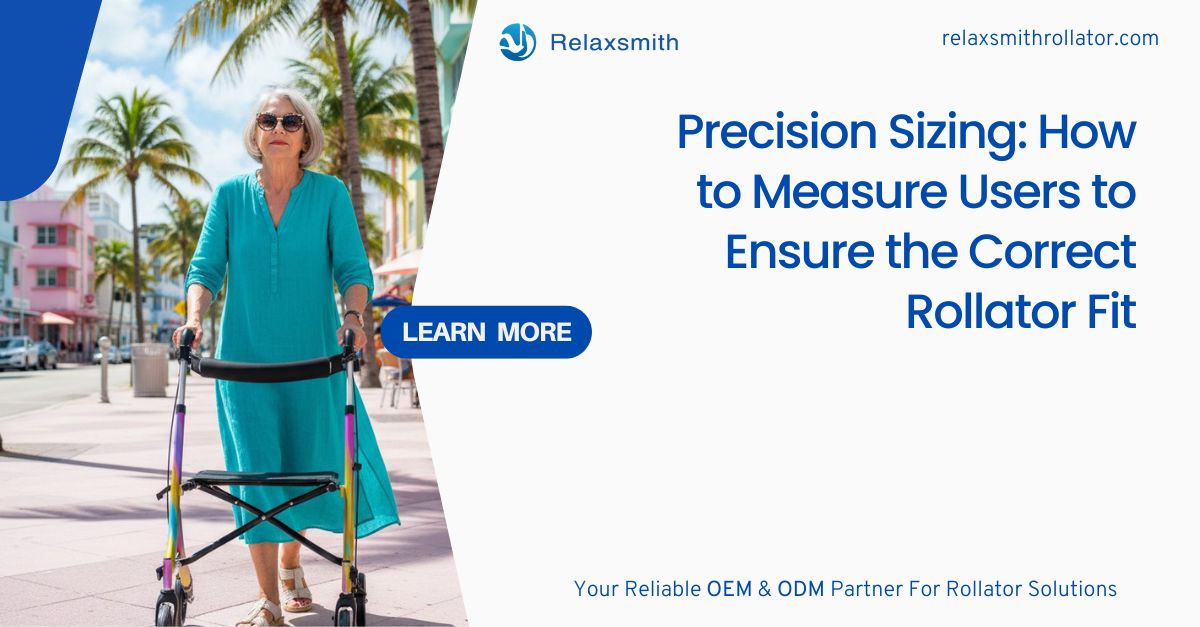
Choosing the right rollator is not just about features—it’s about fit. A poorly fitted rollator leads to poor posture, reduced confidence, and even safety risks. For product managers and procurement specialists, knowing how to properly measure users to ensure the correct rollator fit is essential. This guide outlines exact measurement procedures, ideal specifications, and common pitfalls to avoid.
1. Measure Handle Height at the Wrist
To ensure the correct rollator fit, start with the user standing upright with arms relaxed at their sides. Measure from the floor to the crease of the user’s wrist. This distance indicates ideal handle height. The goal is for elbows to bend slightly (15–20 degrees) when hands are on the grips.
2. Evaluate Overall Height and Weight Capacity
Rollators typically support a range of user heights and body weights. Always match the rollator’s published specifications with the user’s body type. Over- or under-sizing leads to gait compensation and increases fall risk.
3. Check Seat Height and Frame Width
If the rollator includes a seat, measure from the floor to the back of the knees. The user’s feet should remain flat when seated. Likewise, frame width should be wide enough to prevent tripping but narrow enough to fit through doorways. Measuring ensures seating and maneuvering are both safe and comfortable.
4. Consider Arm Span and Grip Diameter
People with shorter or longer-than-average arm lengths may require handlebar adjustments or specially configured grips. Make sure hand grips are not too thick or thin, which affects control. Adjustable ergonomic grips are optimal when fitting large user groups with variable needs.
5. Validate Fit with a Walking Trial
Even after physical measurements are taken, nothing replaces a live walking test. Ensure the user can maintain natural stride, upright posture, and balance. Any signs of leaning, stooping, or wide swinging arms mean the device is misfitted. Adjust or switch models accordingly to ensure the correct rollator fit.
Conclusion
Fitting a rollator correctly reduces injury risk, improves mobility, and enhances user satisfaction. Whether you’re sourcing 10 or 10,000 units, taking precise user measurements ensures better outcomes. Make fit a measurable priority to truly ensure the correct rollator fit in your product pipeline.



