





.JPG)
How Product Certification, Warranty, and After-Sales Service Help End-Users Feel More Secure and Less Anxious About Falling
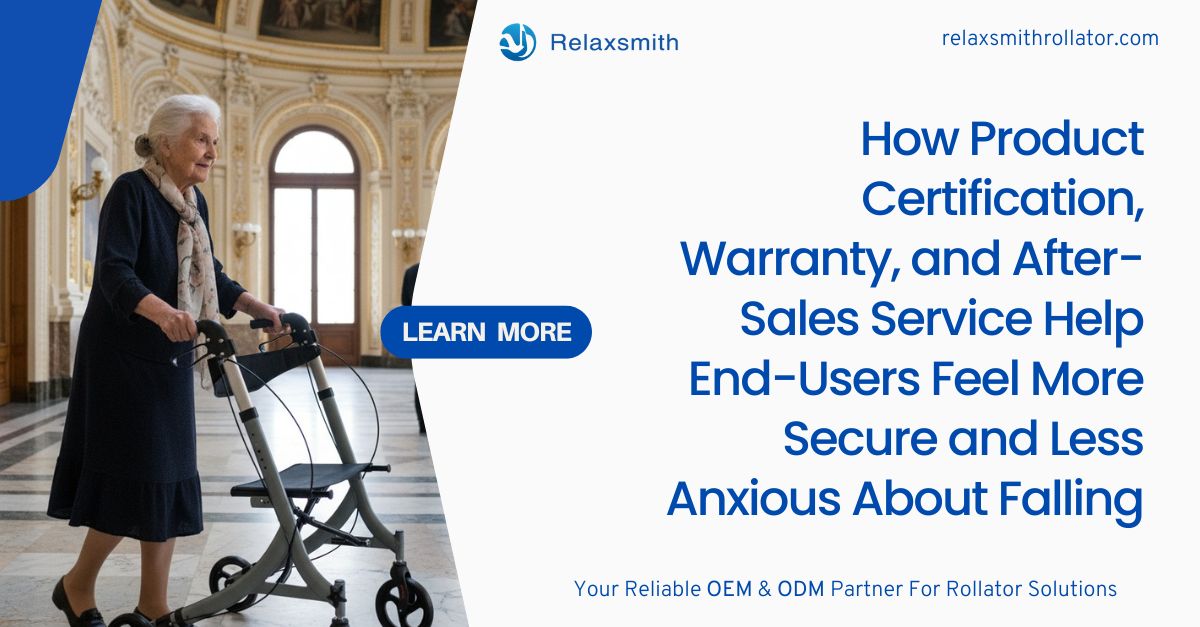
In the mobility aid industry, trust is as vital as performance. For procurement specialists and product managers, offering users peace of mind is a competitive edge. One way to achieve this is by providing product certification, extended warranty plans, and fast-response after-sales services that help users feel more secure and less anxious about falling. This article examines how these support elements influence user safety perception and brand loyalty.
1. The Role of Certification in User Confidence
Certifications like ISO 11199-2 for walking aids, CE marking for European safety standards, or FDA clearance in the US confirm that a rollator meets strict performance and durability criteria. Displaying these certifications on the product and in sales materials gives buyers evidence of quality. When users see compliance credentials, they feel more secure and less anxious about falling.
2. Warranty Policies That Reassure
Offering multi-year warranties—especially for frames and brake systems—provides assurance that the product is built to last. Clear warranty policies with easy claim procedures demonstrate a brand’s commitment to long-term safety. A rollator that’s “guaranteed safe” for five years or more carries psychological weight that makes users feel more secure and less anxious about falling.
3. Responsive and Proactive After-Sales Service
Support doesn’t end after delivery. Having a responsive service channel—whether via phone, live chat, or local dealers—ensures issues like misaligned wheels or loose parts don’t become long-term risks. Offering annual inspection reminders or local tune-up events extends safety beyond the purchase.
4. Service Visibility and User Education
Customers are more likely to trust what they understand. Using QR codes on packaging for warranty registration, video tutorials, and service requests makes users proactive. The sense that help is one click away directly impacts their ability to feel more secure and less anxious about falling.
Conclusion
Procurement decisions that prioritize certifications, clear warranties, and reliable after-sales support increase value not just for regulatory or financial purposes but also for emotional reassurance. These soft benefits lead to harder outcomes: higher satisfaction, reduced liability, and better compliance scores—all while ensuring users feel more secure and less anxious about falling.



