





_compressed.jpg)
Which Rollator Frame Should You Choose: Steel, Aluminum, or Carbon Fiber?
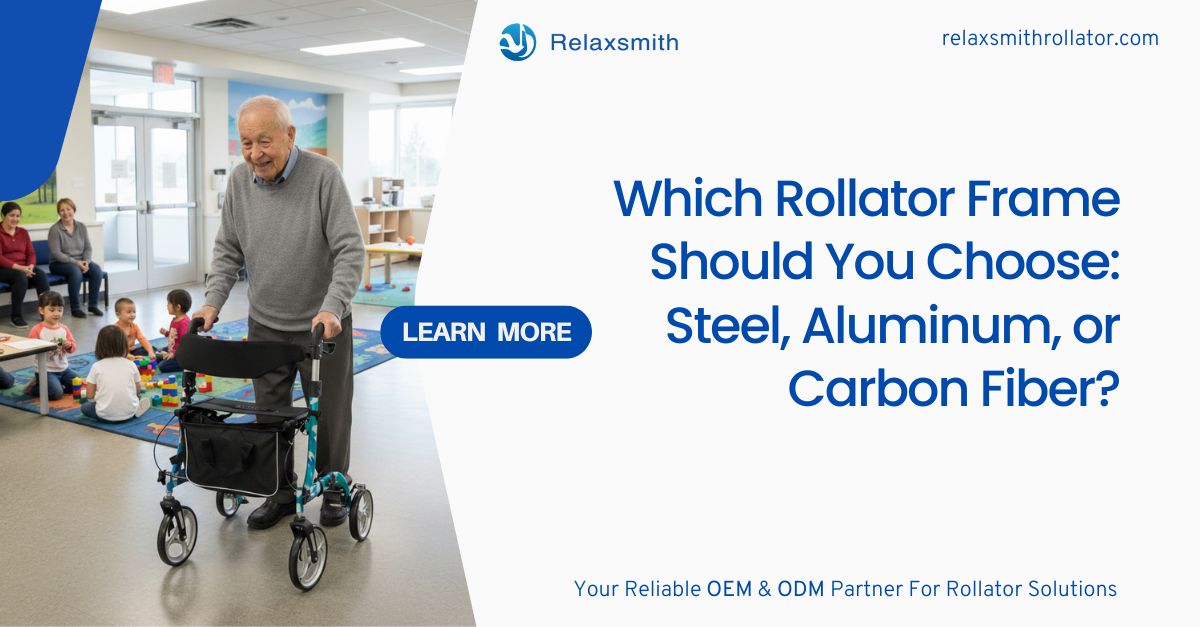
Material choice is more than a design preference—it impacts performance, safety, durability, and user satisfaction. When selecting a mobility device for healthcare facilities or retail, understanding the differences between a steel, aluminum, and carbon fiber rollator becomes essential. This article explores the best use cases, benefits, and limitations of each option to help buyers and product teams make confident decisions.
1. Steel Rollators: High Load Capacity and Budget-Friendly
Steel rollators are built for strength. They often support users over 300 lbs and are great for long-term institutional use. The main tradeoff is weight—steel is heavy, making it less suitable for transport or users with limited strength. For bulk procurement and rugged environments, steel is still viable when choosing between a steel, aluminum, and carbon fiber rollator.
2. Aluminum Rollators: Mid-Range Agility and Affordability
Aluminum frames are lighter and easier to handle while still offering good stability. They fold easily and are perfect for users who need daily indoor-outdoor movement. Hospitals and rehab centers often prioritize aluminum for its balance of performance and portability. Evaluating between a steel, aluminum, and carbon fiber rollator, aluminum typically meets most general user needs.
3. Carbon Fiber Rollators: Lightweight Innovation for Premium Users
Carbon fiber rollators are at the forefront of modern mobility solutions. Ultra-light and sleek, they are favored in private-pay markets and high-end clinical environments. Their weight savings improve user endurance and make lifting into vehicles effortless. However, cost and sourcing challenges must be considered when deciding between a steel, aluminum, and carbon fiber rollator.
4. Frame Material Impact on Maintenance
Steel may rust without protective coating, aluminum offers corrosion resistance, and carbon fiber remains stable in all climates. This affects longevity and replacement cycles. Consider environmental exposure, cleaning routines, and user handling during selection.
Conclusion
Choosing between a steel, aluminum, and carbon fiber rollator depends on user capability, usage environment, and budget. Steel provides economy and durability, aluminum ensures flexibility, and carbon fiber leads in innovation. Decision-makers must weigh each factor against their operational context to maximize performance and satisfaction.