





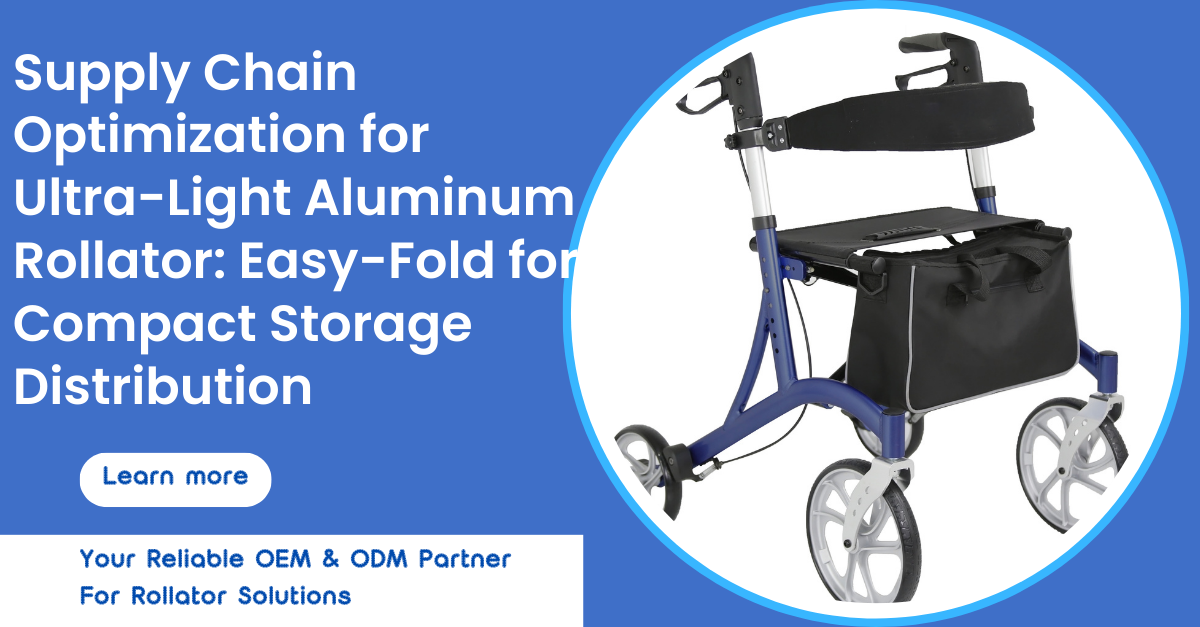
Choosing the Right Rollator: Is the “X” Frame Folding Design the Future of Mobility Devices?
For decision-makers in product development and healthcare procurement, the debate continues: what folding design best serves diverse user groups? This article critically examines the pros and cons of an "X" frame folding design in modern rollators, asking whether this layout should become a new standard.
Engineering Perspective: Form, Function, and Flexibility
The “X” frame allows rollators to fold inward from the sides. Compared to front-folding systems, this approach offers better balance and often a self-standing folded state. These features may influence production teams to adopt the design for convenience and safety.
- Mechanical Balance: The lateral folding keeps the weight centralized
- Durability: Mid-point bracing across both sides enhances structural strength
- User Accessibility: Easier for users to fold in tight quarters like buses or elevators
Procurement Considerations: Is It Worth the Investment?
Those evaluating product lines for healthcare facilities or retailers should weigh the pros and cons of an "X" frame folding design from a logistics and ROI perspective:
- Pros: Easier storage and shipping, modern aesthetics, and high perceived value
- Cons: Typically higher base cost, complex sourcing for replacement parts
- Distribution: Popular among premium brands, niche in low-cost bulk suppliers
User Behavior and Market Feedback
Understanding user sentiment is key. Focus groups and field trials show that users appreciate rollators that don’t feel institutional. The compact fold and self-standing benefits are frequently praised. However, some older adults find the side-folding motion less intuitive than front-folding types.
Design Evolution and Competitive Landscape
In global markets, the “X” frame is becoming synonymous with innovation. Competitive brands now showcase their folding mechanism as a selling point. For emerging manufacturers, incorporating this layout could signal quality and modernization—though it requires updated tooling and design training.
Conclusion
In conclusion, the pros and cons of an "X" frame folding design reflect a nuanced trade-off between convenience, cost, and user acceptance. It represents a forward-thinking approach that aligns with lifestyle branding and improved UX but may not suit all demographics or budget tiers. Product teams should consider both product lifecycle economics and user insights before adopting it widely.
SEO Keywords (40 groups for this series)
- X frame folding rollator
- Folding rollator innovation
- Compact mobility device
- Ergonomic rollator design
- Rollator folding comparison
- Side fold walker pros
- Hospital rollator selection
- Senior walking aid analysis
- Mobility device procurement
- Mechanical folding systems
- Modern walker structure
- Procurement decision support
- Mobility equipment comparison
- Rehabilitation aid analysis
- Healthcare product evaluation
- Transportable walking frame
- Foldable senior rollator
- Product design strategy
- Accessible folding aid
- Medical product lifecycle
- Compact rollator benefits
- Structural walker features
- Innovative mobility products
- Durable healthcare aid
- Cross-frame mobility device
- Premium rollator analysis
- Smart rollator engineering
- Patient-focused design
- Supply chain walker choice
- Multi-user rollator
- Long-term mobility planning
- Senior device usability
- User feedback mobility
- High-utility rollator
- Post-acute care devices
- Walker product trends
- Clinical-grade mobility tool
- Mobility frame efficiency
- Medical user-centered design
- Healthcare supplier guide
Tags:
Folding rollator evaluation, Procurement decision tools, Ergonomic rollator design