


CMEF 2026 Is Open: Come Explore the Next Rollator Trends in Healthcare with Relaxsmith
Reader’s Guide
This post is written from a rehabilitation and seniorcare perspective for distributors, dealers, and care solution providers. It is industry commentary rather than investment, medical, or
procurement adviceand it aims to help readers understand where rollator development is heading as the senior-care market becomes more integrated and more global.
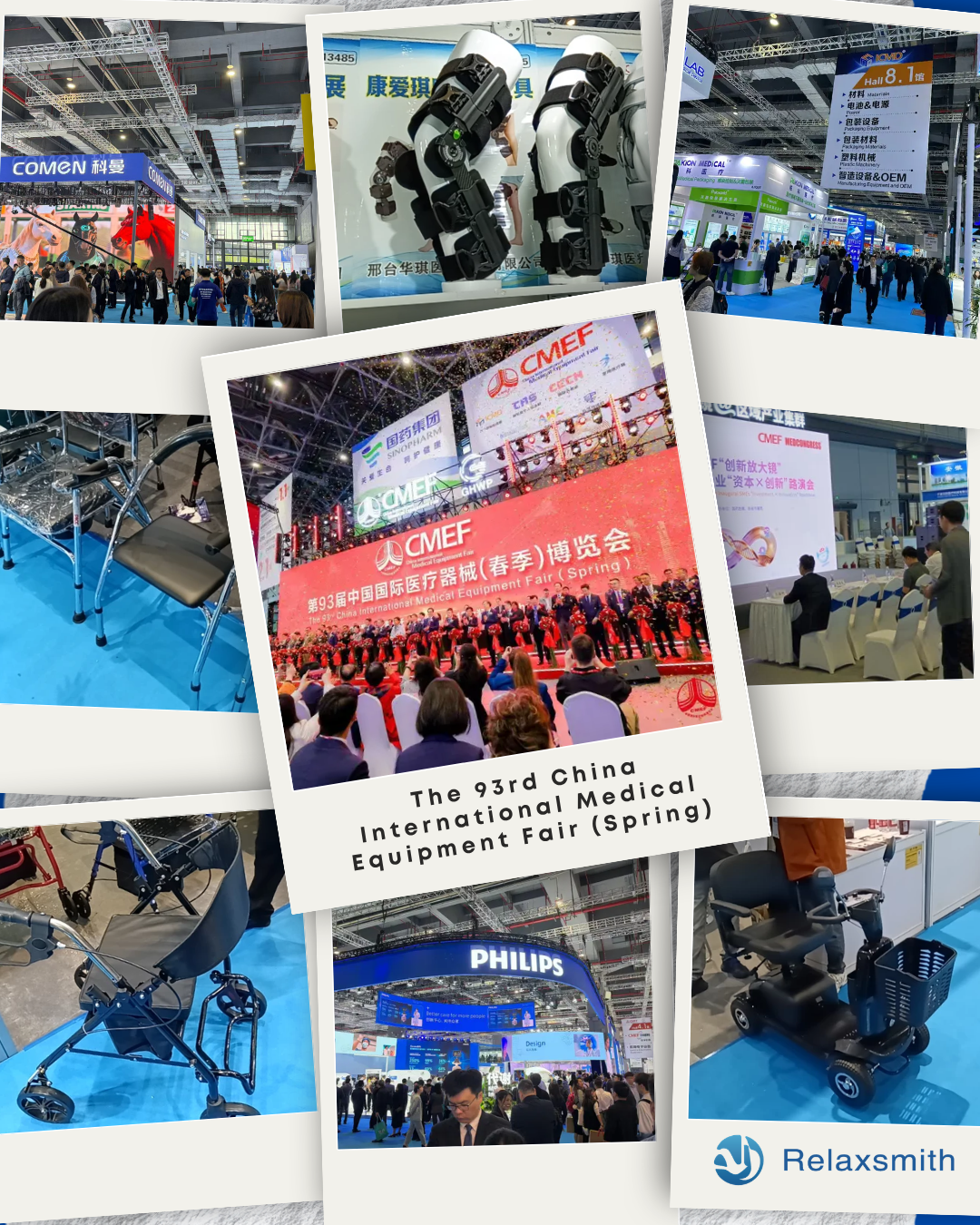
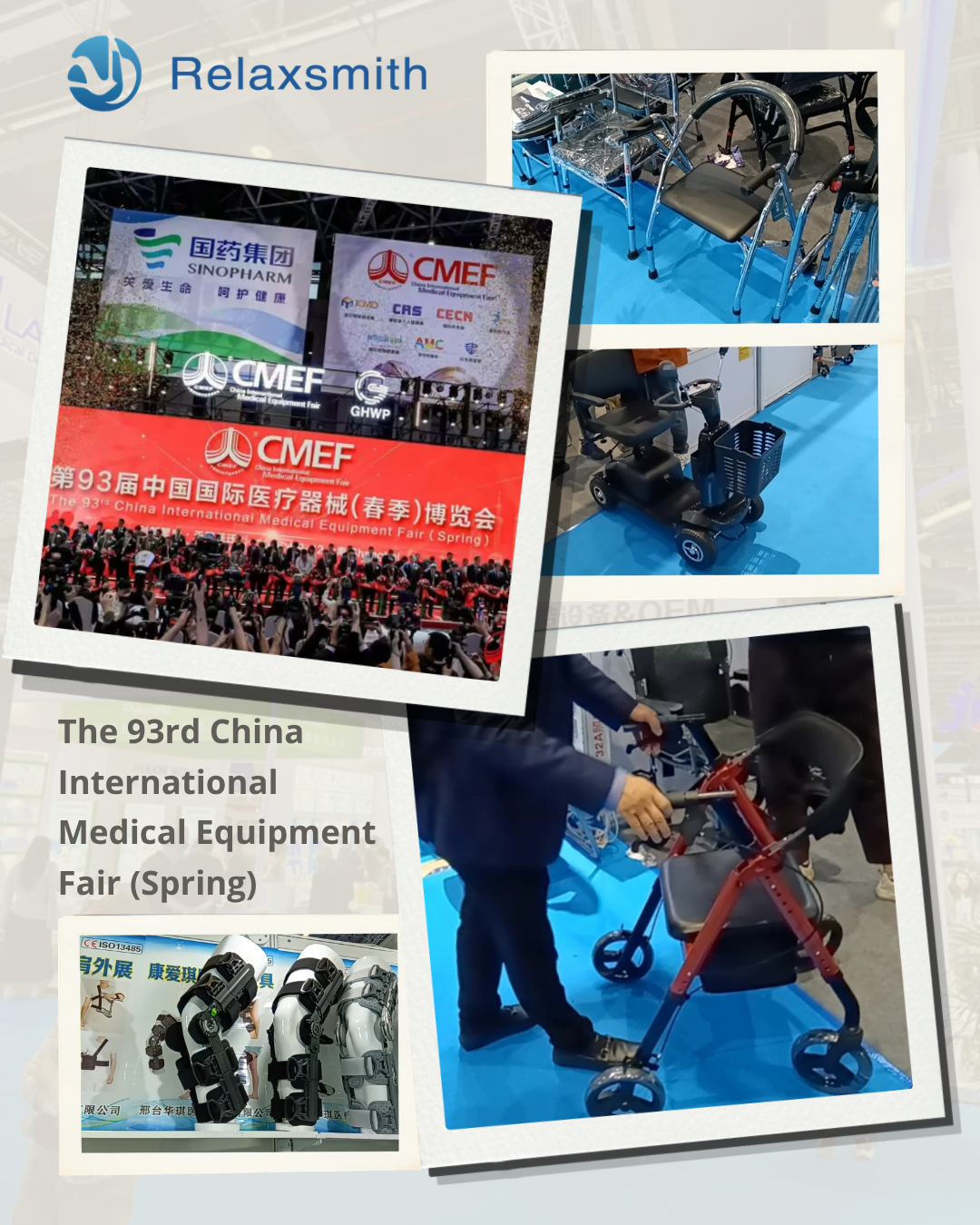
On April 9, 2026, the 93rd CMEF officially opened at the National Exhibition and Convention Center in Shanghai. Under the theme Innovative Fusion, Infinite Leap, the exhibition is positioned as
one of the world’s major medical technology trade platforms, with official CMEF sources describing nearly 5,000 exhibitors and brands from more than 30 countries and regions,
alongside broad coverage of the full medical industry chain. CMEF’s official materials also show that the event extends beyond showcase value into trend observation, business
matching, and international cooperation across medical imaging, diagnostics, smart health, elderly care, rehabilitation, and home-care solutions. For anyone following rollators and
rehabilitation mobility aids, that makes this event important not only as a product exhibition, but as a market signal. What is especially striking this year is that rollator-related solutions
are appearing less as isolated mobility tools and more as part of connected care ecosystems that link rehabilitation, elderly care, and home use. CMEF’s concurrent sectors around rehabilitation,
personal health, elderly welfare, and home medical products reinforce that shift very clearly. In other words, the industry is no longer talking only about how to help a user move from one place
to another. It is increasingly talking about how to support safety, routine, recovery, confidence, and long-term independence through more complete product systems. That broader framing matters
because the need is only growing. The World Health Organization says that by 2030, 1 in 6 people in the world will be age 60 or older, which means every segment tied to ageing, mobility,
and rehabilitation will face stronger demand for practical and scalable solutions. For senior-care distributors, this is the first trend to watch with seriousness: the rollator is evolving from a simple
aid into a more comprehensive health support solution, and the suppliers who understand that shift earliest will usually be the ones best positioned to grow.
The second thing CMEF 2026 makes easier to see is that industry-chain collaboration is becoming much tighter. From research and design to manufacturing, clinical rehabilitation, elderly care, and
home-based application, the gaps between sectors are narrowing. Official CMEF information emphasizes full-chain coverage and cross-sector exchange, and the structure of the event itself reflects
that direction through linked forums, matchmaking activity, and specialized areas touching r ehabilitation, elderly care, and home-use products. For the rollator category, this has real commercial
meaning. The winning product in the next stage is unlikely to be the one that only looks attractive on a catalog page. It is more likely to be the one that fits a clear care pathway. That means better
scenario adaptability, more thoughtful comfort features, easier integration into rehab routines, and stronger relevance for assisted living, long-term care, and home environments. This is also where
the market message becomes more practical under the pressure of population ageing. Buyers will keep asking harder questions. Is the product comfortable for longer use. Does it work in narrow
indoor spaces and predictable outdoor routes. Is it easy for caregivers to support. Does it fit home storage and transport realities. Can it support daily confidence without making the user feel overly
medicalized. Those are not decorative questions. They are sales questions, because they shape adoption. For distributors serving the elder-care channel, the best response is not louder promotion
but smarter positioning. Instead of selling only features, sell use cases. Instead of posting only product photos, show how the product supports rehabilitation, community walking, home routines,
and safer daily movement. This is where relaxsmithrollator should be framed as part of a broader mobility-support strategy rather than as a stand-alone item. When buyers see a product connected
to actual care workflows, training needs, and end-user comfort, price becomes only one part of the decision rather than the whole conversation. That usually leads to stronger trust and better
margins.
The third major signal from CMEF is that internationalization is continuing to strengthen, and that matters enormously for brands and distributors who want to expand in a disciplined way.
CMEF’s official English site highlights international participation, cross-border exposure, and global buyer access, while its conference and forum materials emphasize international cooperation,
policy discussion, and market-trend exchange. For rollator suppliers and distributors, this means the opportunity is no longer limited to selling into one local channel with one standard message.
The category is entering a more open, more professional, and more competitive stage in which global buyers are comparing not only price, but also design maturity, application logic, service capability,
and brand credibility. That is why elder-care distributors should treat CMEF 2026 as a working dashboard, not just a trade show. Watch which products are being placed closer to rehabilitation and
home-care narratives. Watch how comfort, practicality, and scene adaptability are being discussed. Watch which brands communicate more like solution partners and less like commodity sellers.
Then use those lessons in your own sales strategy. Create educational Facebook content around mobility scenarios. Build comparison tools that help buyers choose by environment and care need.
Train your team to explain how a product fits rehab, elderly care, and home use in one continuous story. Offer demo materials for pharmacies, clinics, senior living operators, and home-care partners.
Position relaxsmithrollator as a product line that understands not just movement, but the broader demand for safer, more human-centered daily support. In a market that is becoming more
international and more specialized, that combination of clarity, professionalism, and scenario-based selling is what will help distributors increase conversion and build longer-term customer loyalty.
CMEF is not only a launch platform. It is a window into industry upgrading, and this year that window is especially clear for anyone paying attention to the future of rollators.
Summary
CMEF 2026 shows that the rollator category is moving in three clear directions: deeper integration with rehabilitation, elderly care, and home use; stronger collaboration across the care and
manufacturing chain; and broader international opportunity. For distributors in the senior-care sector, the message is simple but important. The next stage of growth will come less from selling
a frame and more from selling a complete mobility-support story built around comfort, practicality, adaptability, and real-life care scenarios.